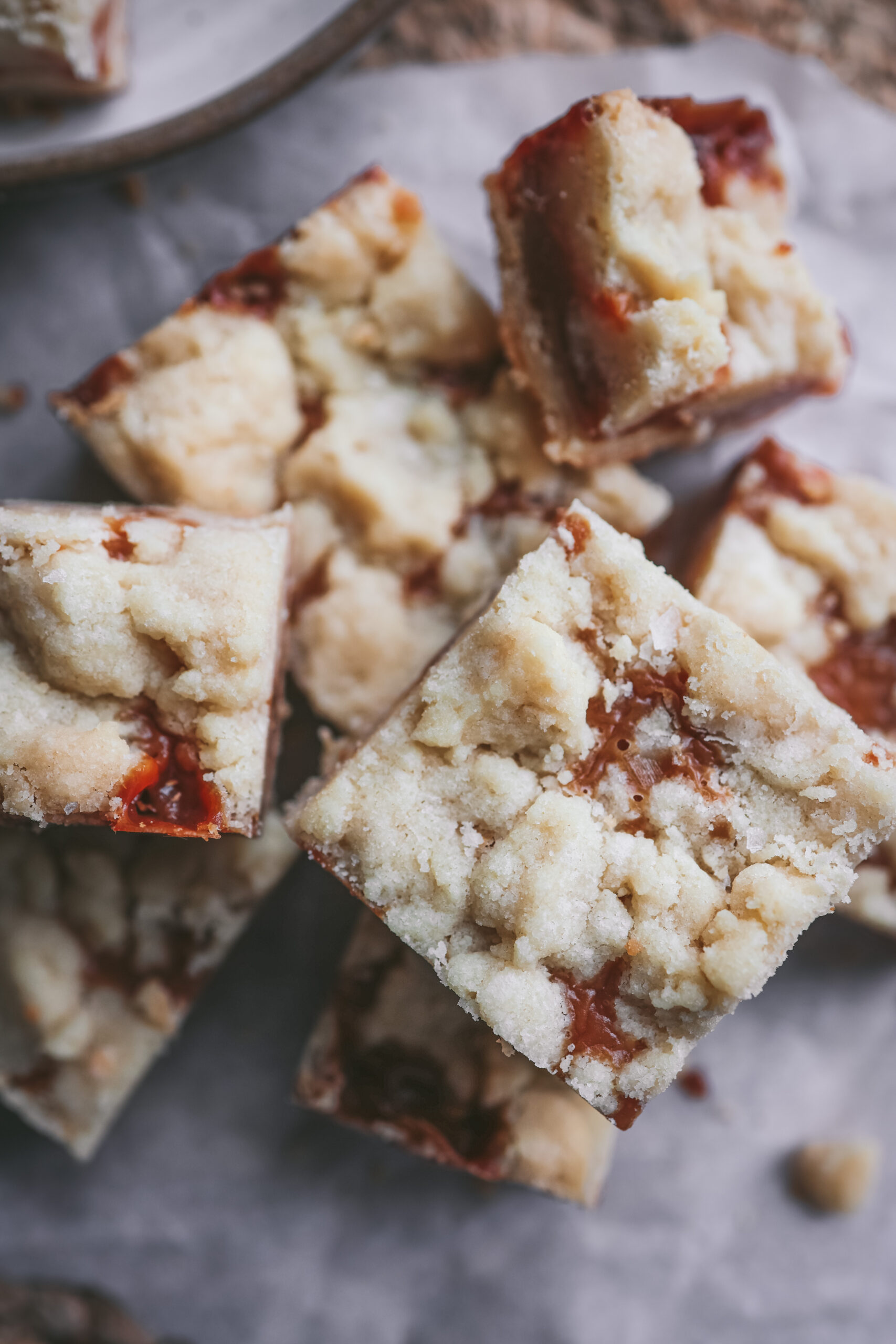
These easy Salted Caramel Bars have buttery shortbread on the bottom, creamy caramel in the middle, and even more crumbly shortbread on top. They’re easy to make, perfect for fall baking, and I fully support keeping the whole pan for yourself!
It’s finally officially fall, except for the fact that it was 92 degrees this week. Whatever though, it’s 50 again today and that’s midwest living for you! I have the pumpkins out, the fall decor up, my leggings and fleece hoodies back in rotation, and the pumpkin spice candles are ready to be lit. I’m in my happy place in life, and I’m fully prepared to ignore any weather that does not cooperate with the season.
Of course, all of that means my fall baking is also in full force. Apples and pumpkin and caramel, oh my. These caramel bars with sea salt are up first, and they are easily one of my absolute favorite caramel desserts. They start with a thick, buttery shortbread crust, followed by a creamy vanilla caramel filling and another layer of crumbly shortbread dough on top.
The coarse sea salt is what pulls everything together by balancing the sweet caramel and buttery crust.You can even use homemade caramel sauce. These bars look bakery style fancy, but they are surprisingly easy to make with simple ingredients and work well for fall parties, bake sales, holiday dessert trays, or weekend treats. They are rich, chewy, buttery, slightly salty, and very addictive!
Salted Butter – Four sticks may sound like a lot, but the butter creates the rich flavor and crumbly texture of both shortbread layers.
Granulated Sugar – Adds sweetness and helps give the shortbread its lightly crisp edges. Creaming it thoroughly with the softened butter also adds air to the dough for a lighter texture.
Powdered Sugar – Dissolves easily into the butter and gives the shortbread a softer, more delicate texture than granulated sugar alone.
Pure Vanilla Extract – Two tablespoons flavor the shortbread dough, while another 1/2 teaspoon rounds out the caramel filling. Pure vanilla adds plenty of warm flavor to a recipe with such a short ingredient list, so this is a good place to use the real thing!
All-Purpose Flour – Provides the structure for the shortbread crust and crumbly topping.
Caramel Squares – Melt into a thick, creamy filling that stays soft between the two shortbread layers.
Heavy Whipping Cream – Thins the melted caramel just enough to make it smooth, spreadable, and chewy once cooled. Its higher fat content also keeps the filling rich without making it watery.
Coarse Sea Salt – Balances the sweetness of the caramel and gives the bars their signature sweet and salty flavor.
Prepare for baking: Preheat the oven to 325°F and coat a 9×13-inch baking pan evenly with nonstick cooking spray. Allow the salted butter to soften at room temperature.
Cream the butter and sugars: Add the softened salted butter, granulated sugar, and powdered sugar to the bowl of a stand mixer. Beat for at least 3 minutes, scraping down the sides of the bowl as needed, until the mixture looks light and fluffy. Pour the pure vanilla extract into the creamed butter mixture. Mix just until the vanilla is evenly incorporated.
Make the shortbread dough: Add the all-purpose flour a little at a time, mixing on low speed after each addition to keep the flour from spilling out of the bowl. Continue mixing just until a soft shortbread dough forms without any dry pockets of flour.
Form the bottom crust: Divide the shortbread dough in half and press one portion evenly across the bottom of the prepared 9×13-inch baking pan. Place the remaining dough in the refrigerator to keep it firm enough to crumble over the caramel filling later.
Bake the shortbread crust: Bake the bottom crust for 18 to 20 minutes, or until it feels firm and the edges are just beginning to turn light golden brown.
Make the caramel filling: Add the unwrapped caramel squares, heavy whipping cream, and vanilla extract to a small saucepan. Warm over medium-low heat, stirring frequently, until the caramels are completely melted and the filling is smooth.
Assemble the caramel bars: Pour the warm caramel filling evenly over the baked shortbread crust and carefully spread it to the edges. Remove the chilled dough from the refrigerator and crumble it evenly over the caramel layer, then sprinkle the coarse sea salt across the top.
Bake the salted caramel bars: Return the pan to the oven and bake for another 25 to 30 minutes. The shortbread topping should feel firm and the edges should just be starting to turn light golden brown.
Cool and slice: Place the baking pan on a wire cooling rack and allow the Sea Salt Caramel Bars to cool completely before cutting. Enjoy!
Use butter that is softened but still slightly cool. It should give when pressed with a finger without looking shiny or greasy, since overly warm butter can make the shortbread spread and feel oily.
Stop the mixer and scrape beneath the butter mixture. Four sticks of butter can hide dense patches of sugar along the bottom of the bowl, even when the mixture looks fluffy on top.
Line the pan with a parchment paper sling after spraying it. Leaving parchment overhanging on two sides makes it much easier to lift out the cooled bars and cut clean squares without digging them from the pan.
Press the bottom crust with a flat-bottomed measuring cup. This creates an even layer with consistent thickness, especially in the corners where shortbread dough tends to pile up.
Keep the caramel below a simmer while it melts. High heat can cause the heavy cream to separate or the caramel to scorch along the bottom before all the squares have melted.
Have the baked crust ready before the caramel finishes melting. The filling thickens quickly as it cools, so pouring it while warm makes it much easier to spread without pulling up pieces of the shortbread crust.
Crumble the chilled topping into several different sizes. A mix of small crumbs and larger pieces covers the caramel more evenly and creates that bakery-style shortbread top without forming one solid layer.
Judge doneness by the shortbread, not the bubbling caramel. The filling may bubble around the edges before the bars are ready, so look for a firm topping with only a faint golden color along the sides.
Warm and wipe the knife between cuts. Dip a sharp knife in hot water, dry it completely, and clean the blade after each slice to move through the caramel without dragging it across the shortbread.
Add a chocolate drizzle by spooning melted semisweet or dark chocolate over the completely cooled bars before slicing.
Mix chopped toasted pecans into the topping for a buttery crunch that pairs well with the soft caramel filling.
Give the shortbread a warm fall flavor by mixing 1 teaspoon of ground cinnamon or pumpkin pie spice into the flour before adding it to the butter mixture.
Make the bars gluten free by replacing the all-purpose flour with an equal amount of a measure-for-measure gluten-free baking flour that contains xanthan gum.
Create an apple caramel layer by spreading a thin layer of thick apple butter over the baked shortbread crust before pouring on the warm caramel.
Add crushed pretzels to the topping for extra salt and crunch, pressing them lightly into the shortbread crumbles before the second bake.
Finish the bars with toffee pieces by sprinkling them over the shortbread topping during the final 5 minutes of baking so they soften without burning.
Storing: Allow the bars to cool completely before transferring them to an airtight container, since trapped heat can create condensation and make the shortbread soggy. Arrange the bars in a single layer or place parchment paper between stacked layers, then store them at room temperature for up to 4 days or refrigerate them for up to 1 week. Let refrigerated bars sit at room temperature for about 15 minutes before serving so the caramel has time to soften.
Freezing: Cool and cut the bars, then arrange them in a freezer-safe container with parchment paper between each layer so they do not stick together. Freeze for up to 3 months, keeping in mind that the shortbread may lose a little of its crisp texture after thawing. Thaw the bars in the refrigerator overnight or at room temperature for 1 to 2 hours before serving.
Can I use caramel bits instead of individually wrapped caramel squares?
Yes, use 14 ounces of caramel bits in place of the unwrapped squares and melt them with the heavy cream and vanilla as directed. Measuring by weight keeps the filling consistent since package sizes can vary by brand.
Why did my caramel layer turn hard after the bars cooled?
The caramel may become firm if it was heated too aggressively or cooked longer than needed after the candies melted. Remove the saucepan from the heat as soon as the mixture is completely smooth because the filling will continue to thicken as it cools.
Can I make Salted Caramel Bars ahead of time?
Yes, these bars are a great make-ahead dessert because the caramel sets and the layers become easier to slice after several hours. Bake them one day before serving, let them cool completely, and keep them covered until you are ready to cut them.
Why did the caramel leak underneath the crust?
Caramel can seep beneath the shortbread when the bottom crust has cracks, thin spots, or gaps around the edges of the pan. Press the dough firmly into every corner and check the surface before baking so the crust forms a complete base.
Can I bake these bars in a glass baking dish?
Yes, but glass retains heat longer than metal and may cause the edges to brown more quickly. Begin checking a few minutes early and place the dish on a cooling rack after baking so the hot glass does not continue cooking the edges.
How many Salted Caramel Bars does one pan make?
A 9×13-inch pan makes about 24 small bars or 16 larger dessert bars. These are rich and buttery, so smaller squares are usually plenty for parties.
It’s a perfect shortbread layer under and over a layer of slightly salty creamy caramel. They are so yummy and super easy!
Our best tips for quick and tasty recipes, ideas and more, right to your inbox.

2 Responses
Thank you so much for including me!